How to Pick a Reliable LED Industrial Lighting Supplier in China
If you've spent any time sourcing LED lighting from China, you already know the drill: five suppliers quote the same 150W high bay at wildly different prices, three of them promise "German quality," and two disappear the moment you ask for a factory audit.
This isn't a problem of bad products. It's a problem of bad filters.
China makes over 70% of the world's LED lighting. The good suppliers exist — plenty of them. But the gap between a factory that ships you 10,000 lights on time and one that ships 8,000 broken ones with 3,000 missing is often invisible in a price sheet.
So what should you actually look at? Let's walk through it.
"Best Price" Is Usually an Expensive Mistake
There's a reason some quotes land at $12 per unit while others sit at $28.
At $12, someone is cutting corners. Usually in one of three places:
The LED chips. A branded chip from Lumileds or Seoul Semiconductor costs 3–5 times more than a no-name equivalent. The light output might look similar on day one. After 10,000 hours, the difference is ugly — lumen depreciation of 30% vs. 5%.
The driver. This is the part that fails first. A Mean Well or Tridonic driver adds cost, but it's also why the fixture lasts 50,000 hours instead of dying at 12,000.
The housing. Thinner aluminum, weaker seals, cheaper gaskets. In a climate-controlled showroom, none of this matters. In a steel mill or a cold storage warehouse, it's everything.
The uncomfortable truth: when a supplier undercuts the market by 40%, they aren't more efficient. They're using worse components and hoping you don't notice until after the wire transfer clears.
What to do instead: Ask the supplier to break down the BOM (bill of materials). Every serious manufacturer can tell you whose chips, whose driver, and whose aluminum they're using. If they can't — or won't — walk away.
What a Legitimate Factory Looks Like
You don't need to fly to Shenzhen to separate a real factory from a trading company with a rented showroom. A few things give it away:
They Answer Technical Questions Without Pausing
Send them a spec sheet with a non-standard CCT or beam angle request. A factory will come back with a clear yes/no and maybe a suggested alternative. A trading company will say "yes, we can do anything" and then scramble to find a factory that can.
They Have an In-House Engineering Team
Ask: "Can you modify the PCB layout to accommodate a different driver form factor?"
A factory with real R&D capability answers this in hours. A middleman forwards your email and hopes for the best.
Their Certifications Are Current and Specific
We'll get into certifications in a moment, but here's the quick version: if their UL or CE certificates are expired, or if they can't produce the test reports behind them, the certificates are probably fake.
They're Willing to Do a Video Walkthrough
This one's simple but effective. Ask for a live video tour of the production floor. Real factories say yes. Trading companies make excuses.
Certifications: What Counts and What's Window Dressing
Not all certifications carry the same weight. Here's a quick reality check:
| Certification | What It Actually Means | Watch For |
|---|---|---|
| CE (self-declared) | The manufacturer claims compliance. No third-party testing required. | Essentially meaningless on its own. |
| CE (Notified Body) | Tested by an accredited EU lab. | Check which NB issued it — some are stricter than others. |
| UL / ETL | Independently tested for North American safety standards. | Expensive and hard to fake. A factory with valid UL listing is serious. |
| DLC (DesignLights Consortium) | Energy efficiency qualification for utility rebates in North America. | Requires periodic retesting. Check the listing is current. |
| SAA (Australia) | Required for the Australian market. | Make sure it covers the exact model, not just the product family. |
| ISO 9001 | The factory has a documented quality management system. | Many factories have this. It's table stakes, not a differentiator. |
One pattern to watch: suppliers that show you a wall of certificates but can't produce the original test reports. Certificates can be photoshopped. Test reports from UL, TÜV, or Intertek are harder to fake — and you can verify them directly with the issuing body.
OEM vs. ODM vs. Off-the-Shelf — Know What You're Buying
Not every project needs a custom light. But if you think you're getting a custom solution and you're actually buying a stock product with your logo printed on it, you're overpaying.
Off-the-shelf (stock product): Fast, cheap, no MOQ issues. Good for straightforward replacements. Bad if you need specific optics, mounting, or controls.
ODM (the factory designs, you brand it): The supplier already has the product developed. You get to put your name on it, maybe tweak the color temperature or housing finish. Faster than full custom. But your competitor down the street can buy the same light.
OEM (you design, the factory builds): You own the design — or at least collaborate on it. The factory handles manufacturing, but the spec is yours. Higher MOQ, longer lead time, but you get exactly what you need and nobody else can offer it.
A good supplier will tell you which model fits your project. A bad one will promise OEM at ODM pricing and figure out the details later.
Can They Actually Deliver?
A factory that makes great samples but can't ship on time is worse than a factory that's honest about its limits.
Three things to check:
1. Lead time track record. Don't ask "what's your lead time." Ask "what was your average lead time for the last 20 orders of this product category?" Most ERP systems can answer this. If they can't, that's a red flag.
2. Production capacity vs. your order size. A factory that does 5,000 units a month isn't going to magically deliver 50,000 on your timeline. Ask what percentage of their total capacity your order represents.
3. Their subcontracting habits. Some factories outsource PCB assembly, aluminum extrusion, or driver sourcing. This isn't necessarily bad — specialization is normal. But you need to know who's actually making what. If quality problems arise later, you want to trace them to the right source.
Communication Signals You Shouldn't Ignore
Some things only show up after you've exchanged a few emails:
They never say no. A supplier that agrees to every request — shorter lead time, lower price, custom spec — without pushing back on anything is either lying or doesn't understand your requirements. Neither is good.
English isn't fluent but technical English is precise. This is actually a good sign. A factory that can discuss CRI, beam angles, and driver specifications in clear, technically accurate English — even with an accent — knows their product.
They ask about your application. Good manufacturers want to know where the lights are going: warehouse ceiling height, ambient temperature, dust levels, operating hours. This means they're thinking about whether their product will work in your environment, not just whether they can sell it to you.
They have reference projects. Not just words on a website. They can name specific clients (even if under NDA, they can describe the project type and scale), show you installation photos, and explain what was challenging about the job.
A Better Way to Source LED Industrial Lighting
Here's the thing: the best supplier relationships we've seen don't start with a price comparison spreadsheet. They start with a conversation about the project.
The suppliers worth working with will ask about your ceiling height before they quote lumens. They'll want to know if there's dust or moisture in the air. They'll question whether the 120° beam angle you requested actually covers the aisles the way you think it will.
Because in industrial lighting, the product itself is only half the equation. The other half is whether it's the right product for what you're actually trying to illuminate.
Ready to Talk About Your Project?
At Recolux, we've been designing and manufacturing LED industrial and commercial lighting systems from our Shenzhen facility for over a decade. We do OEM and ODM projects for clients across Europe, North America, Southeast Asia, and the Middle East.
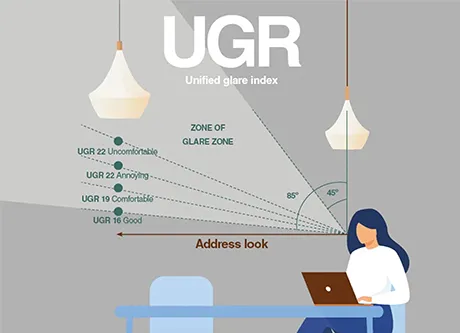
Our E-line series combines 20 optical distributions with UGR<19 glare control and Ra>90 color rendering — the kind of precision you need when lighting quality directly affects worker productivity and safety.
We don't promise the lowest price on Alibaba. We promise lights that work, on time, with the specs you asked for. If that sounds like what you're looking for, reach out for a consultation and quote.
Recolux — Make Lighting Simple.