LED Batten Lights for Industrial Lighting: A Practical Guide
Industrial facilities need lighting that works as hard as the people inside them. Not decorative, not fancy — just reliable illumination that covers large areas without driving electricity bills through the roof. LED batten lights have become the default choice for warehouses, production floors, and storage areas, and for good reason.
This guide covers what LED battens actually are, where they work best, and what specs matter when you're specifying fixtures for an industrial project.
What are LED batten lights?
A batten light is a linear fluorescent tube replacement designed for surface or suspension mounting. The old T8 and T5 fluorescent battens dominated industrial ceilings for decades — and most of them are still there, humming away and costing far more to operate than anyone realizes.
LED battens replace those fixtures with a sealed linear luminaire that bolts directly to the ceiling or hangs from a chain. No external ballast, no starter, no flickering after startup. Just power in, light out.
Recolux makes two distinct batten product lines worth knowing: Allnice and Tubes. They target slightly different use cases, which matters when you're matching the right product to the right space.
Allnice: the labor-saver
The Allnice seriescarries an IP44 rating, which means it handles splashing water and solid objects larger than 1mm. That's not fully waterproof, but it's enough for most indoor industrial environments where things get damp but not hosed down.
The standout feature here is the end cap fastener design. Recolux says it cuts installation labor cost by 80% compared to standard batten fittings. The claim is worth examining: traditional batten installation involves undoing multiple screws, wiring into a terminal block, and securing the diffuser. Allnice's end cap design appears to simplify the final connection step significantly.
The fixture is slim, not by accident, but because a lower profile means less material cost and a cleaner look on the ceiling. For facility managers retrofitting existing fluorescent battens, the reduced depth also helps when space is tight between the ceiling and stored materials on racking.
Tubes: aluminum and PC construction
The Tubes series takes a different approach. The housing uses aluminum for heat dissipation, with a polycarbonate (PC) diffuser. Aluminum is a better thermal conductor than the plastic housings found on cheaper LED battens, which matters for LED lifespan. Heat is what kills LEDs, and if the fixture can't shed it, the lumen depreciation accelerates.
The PC diffuser gives uniform illumination without the striations you see from cheaper diffusers. Applications listed include shops, offices, schools, train stations, and exhibition halls, so this product crosses over between industrial and commercial, which is useful if you're lighting a mixed-use facility.
Multilumen and Multicolor options are available. Multilumen means the same fixture can be set to different light output levels, usually via a switch or by connecting different terminals. Multicolor means CCT (Correlated Color Temperature) can be selected, typically 3000K, 4000K, or 5000K, without changing the fixture. Both features are genuinely useful for installers who want to keep inventory simple: one SKU covers multiple project requirements.
Where batten lights actually work best
Warehouses and storage facilities. High ceilings, long aisles, need for uniform light levels across shelving. Batten lights mounted parallel to aisles give even coverage. IP44 is sufficient unless you're in a food processing plant or somewhere they wash the floors with pressure washers.
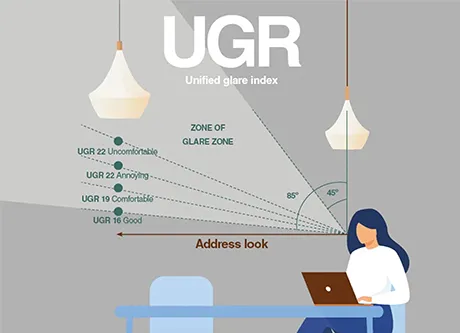
Production areas. Assembly lines need consistent illumination without glare. The uniform diffuser on the Tubes series helps here. No hot spots, no dark patches along the bench.
Parking garages. Underground garages are damp, dirty, and hard to access for maintenance. IP44 isn't enough for direct water exposure, but for covered garages it works. The Tubes series in an IP69K variant (Tubular) would be better if you're dealing with hosedown environments.
Schools and offices. The Tubes series is explicitly listed for these applications. 4000K CCT, if Multicolor is specified, gives a neutral white that doesn't feel clinical like 5000K+ can.
Installation reality check
The 80% labor cost reduction claim for Allnice deserves some scrutiny. What typically takes time in batten installation isn't just the electrical connection, it's the physical mounting, running the cabling, and positioning. If the end cap design truly simplifies the wiring step, that's maybe 20-30% of the total labor, not 80%. But if "80% of the wiring labor" is what's meant, then the claim is more defensible.
That said, any design that reduces connection time helps on large projects where you're installing hundreds of fixtures. The savings add up.
For the Tubes series, the aluminum housing adds some weight compared to all-plastic battens, which means you'll want two people for longer lengths (5ft and up). Not a dealbreaker, but worth planning for.
Retrofitting existing fluorescent battens
If you're replacing old T8 or T5 fluorescent battens, you have three options.
First, replace the tube only with plug-and-play LED tubes. This keeps the existing fixture. It's the cheapest upfront, but you're stuck with an old diffuser that may be yellowed, and the housing may not be IP-rated.
Second, replace the entire batten with an LED unit, which is what Allnice and Tubes are. More expensive upfront, but you get a new housing, new diffuser, better efficiency, and proper IP rating.
Third, use retrofit kits like the Mega or Meneo products from Recolux's office lighting range. These are magnetic retrofit tubes that keep the existing fixture but replace the innards. Different product line, but worth knowing about if budget is tight.
For most industrial applications, option two is the right call. The existing fluorescent housings were never designed for LED thermal management, and the old diffusers cut light output by 10-20% compared to a purpose-built LED batten.
What specs to look for
Not all LED battens are created equal. Here's what actually matters.
Lumen output per watt (lm/W). Anything below 100 lm/W is dated technology. Quality LED battens run 120-150 lm/W. The difference shows up on your electricity bill.
CCT options. 4000K is the safe default for industrial spaces. 5000K+ feels harsh and can cause fatigue over long shifts. 3000K is too warm for task work. If you can get Multicolor, specify 4000K.
CRI. Color Rendering Index above 80 is acceptable; above 90 is excellent. For industrial inspection tasks where color matching matters, push for CRI 90+. For general warehousing, CRI 80 is fine.
IP rating. IP44 handles splashes and dust. IP65 handles water jets. IP69K handles pressure washing. Match the rating to the environment. Over-specifying wastes money, under-specifying causes failures.
IK rating. Impact protection. IK08 withstands a 5 joule impact, roughly a 1.7kg mass dropped from 300mm. For areas where things might get thrown or bumped, IK08 or higher is worth having.
How batten lights compare to other industrial options
Compared to E-line trunking systems. E-line is a rail system where fixtures plug in and can be repositioned. Batten lights are fixed in place. If you need flexibility to relocate lights as racking changes, E-line wins. If you need simple, low-cost coverage of a large area, battens win.
Compared to tri-proof lights. Tri-proof (IP65+) fixtures are fully sealed against dust and water jets. Batten lights at IP44 are not. If your environment involves water jets, humidity above 80%, or washdown, use tri-proof. For dry-to-damp indoor spaces, batten lights cost less and are easier to maintain.
Compared to high bay lights. High bays are for ceilings above 6 meters. Batten lights are for standard ceiling heights (3-6 meters). Don't use battens in a high-ceiling warehouse, you won't get enough light on the floor.
Choosing the right batten for your project
If you're specifying for a new build or a major retrofit, use Allnice when installation speed matters. The labor savings are real on large projects, and the IP44 rating covers most indoor industrial environments.
Use Tubes when you need the aluminum heat dissipation and uniform light quality. The Multilumen/Multicolor options also make it easier to standardize across a facility with different lighting needs in different areas.
Go to IP69K Tubular if the environment involves water, dust, or both. The polycarbonate housing on the PC variant, PMMA on another, and glass on the third. Pick based on whether chemical resistance (glass), impact resistance (PC), or clarity (PMMA) matters most for your application.
Maintenance and lifespan
A well-designed LED batten should give you 50,000 hours of useful life (L70, meaning 70% of initial lumen output remaining). That's roughly 11 years at 12 hours per day, or 17 years at 8 hours per day.
In real-world terms, that means you'll probably redo the lighting for other reasons (renovation, change of use, upgrade to a newer tech) before the LEDs actually fail. But heat, power quality, and switching frequency all affect lifespan. The aluminum housing on the Tubes series helps here by keeping junction temperatures lower.
When they do fail, it's usually the driver, not the LEDs. Recolux's E-evolution tri-proof design, a different product but the same principle, allows tool-free replacement of the driver. Worth asking whether the batten lines have a similar serviceability feature.
Bottom line
LED batten lights are the workhorse of industrial lighting. They're not exciting, and they're not supposed to be. What they are is efficient, long-lasting, and straightforward to install.
Allnice and Tubes from Recolux cover the main bases: Allnice prioritizes installation speed; Tubes prioritizes build quality and light uniformity. Both are IP44, both use efficient LED technology, and both are positioned for cost-conscious industrial projects where reliability matters more than fancy features.
If your project involves retrofitting old fluorescent battens, don't just swap the tubes. Replace the whole fixture. You'll get better light, lower energy use, and a housing that's actually designed for LED thermal management. The upfront cost is higher, but the total cost of ownership over 5 years is almost always lower.